Screen Reader Access
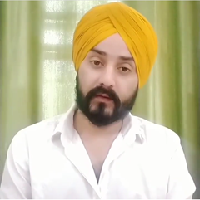
Dr. Ravail Singh
Principal Scientist
Plant Sciences and Agrotechnology Division (PSA)
CSIR – Indian Institute of Integrative Medicine, Canal Road, Jammu – 180001
Email: ravail[dot]singh[at]iiim[dot]res[dot]in
Bio Sketch
Dr. Ravail Singh is a dedicated researcher at the Indian Institute of Integrative Medicine (IIIM) in Jammu, renowned for his expertise in marine and freshwater ecosystems. His work centers on elucidating the critical role of benthic fauna in sustaining the ecological balance of aquatic environments, with a particular emphasis on the diverse habitats of Jammu and Kashmir.
Dr. Singh’s research investigates the ecological dynamics of benthic communities, exploring their population dynamics and responses to environmental stressors. His studies explore the morphological, cellular, and functional adaptations that enable these invertebrate species to thrive across varied habitats, contributing to the understanding of biogeographic patterns in aquatic ecosystems.
A key pillar of his research lies in molecular genomics and metabolomics, where he screens benthic invertebrates to identify biologically significant secondary metabolites with potential applications in pharmaceuticals, biotechnology, and environmental remediation. This integrative approach provides
deeper insights into the functional biology and ecological roles of these organisms.
Embracing cutting-edge technologies, Dr. Singh using artificial intelligence (AI) and machine learning (ML) to advance his research. By employing AI and ML algorithms, he characterizes the taxonomic diversity and functional traits of benthic communities, spanning microscopic nematodes to macroinvertebrates. These tools also facilitate genomic analyses, uncovering the genetic underpinnings of adaptation and resilience in these species. His innovative use of computational models enhances predictive capabilities, aiding in the conservation and management of aquatic ecosystems under global environmental change.
Education
| Degree | Subjects | University | Qualifying Year |
| PhD | Marin Biology | Oldenburg University, Germany | 2015 |
| M.Sc | Fisheries | Bhopal University | 2008 |
| B.Sc | Medical (Chemistry, Botany, Zoology) | Jammu University | 2005 |
Position Held
| Position Held | Institution | Duration | Role |
| Principal Scientist | Indian Institute of Integrative Medicine (IIIM), Jammu | 13.01.2025 – Present | — |
| Scientist | Indian Institute of Integrative Medicine (IIIM), Jammu | May 2019 – Jan 2025 | Functional genomics of the macro and megafauna |
| Post-doctoral researcher | Senckenberg am Meer, Germany | 2020 – 2022 | To understanding the role of meiofauna in the marine costal food-webs in the German Bight (North Sea) |
| Scientist | National Institute of Oceanography, Goa | Jan. 2017 – May 2019 | Deep Sea Biology |
| Post-doctoral researcher | Senckenberg am Meer, Germany | 2015 – 2016 | Polymetallic Nodule associated nematode community from the Peru Basin |
| DAAD PhD scholar | Senckenberg am Meer, Germany | 2011 – 2015 | Biodiversity of deep-sea nematode communities from commercially important manganese nodules areas |
| CSIR Senior Research Fellow | National Institute of Oceanography, Dona Paula, Goa | 2010 | Created the Genus level database of the nematode and other meiofauna groups |
Area of Expertise
- Marine Biology.
- Benthic Ecology.
- Bioinformatics.
- Genomics.
- Metabolomics.
- Computational Biology.
Projects
Leading project as Principal Investigator (PI)
Exploring Seamount Ecosystems: Biodiversity, Ecosystem Functioning, and Mining of Genetically Encoded Metabolites (GEMs) through an Integrated Multi-Omics Approach (Deep Sea Mission)
Publications
| S. No. | Author(s) | Title | Year | Journal | Volume/Issue |
|---|---|---|---|---|---|
| 1 | Ravail Singh*, Dmitry M. Miljutin, Maria A. Miljutina, Pedro Martinez Arbizu, Baban S. Ingole | Deep-sea nematode assemblages from a commercially important polymetallic nodule area in the Central Indian Ocean Basin | 2014 | Marine Biology Research | 10, 906–916 |
| 2 | Ravail Singh*, B.S. Ingole | Structure and function of nematode communities across the Indian western continental margin and its oxygen minimum zone | 2016 | Biogeosciences | 13, 191–209 |
| 3 | Ravail Singh*, Dmitry M. Miljutin, Ann Vanreusel, Teresa Radziejewska, Maria M. Miljutina, Alexei Tchesunov, Christian Bussau, Valentina Galtsova, Pedro Martinez Arbizu | Nematode communities inhabiting soft deep-sea sediment in polymetallic nodule fields vs. nodule-free abyssal areas | 2016 | Marine Biology Research | 12, 345–359 |
| 4 | Ravail Singh*, Baban Ingole, Sabyasachi Sautya | Ferromanganese nodule-associated meiofauna with special reference to nematodes from the Central Indian Ocean | 2019 | Deep Sea Research Part II | 161, 16–28 |
| 5 | Suruchi Gupta, Ravail Singh* | Comparative study of codon usage profiles of Zingiber officinale and associated fungal pathogens | 2021 | Molecular Genetics and Genomics | 296, 1355 |
| 6 | Ravail Singh* | Analysis of synonymous codon usage bias in Ancylostoma ceylanicum | 2021 | Gene Reports | 24, 101290 |
| 7 | Suruchi Gupta, Ravail Singh, Gulzar Rather, Arti Sharma, Surrinder Latto | Mining transcriptome of medicinally important Plantago species for terpenoid biosynthetic pathway genes | 2022 | Protoplasma | 259, 439–452 |
| 8 | Ravail Singh*, Varun Mumbarekar | Neural network model approach for automated benthic animal identification | 2022 | ICT Express | 8(4), 640–645 |
| 9 | Suruchi Gupta, Malvi Choudhary, Baljinder Singh, Ravail Singh, Manoj K. Dhar, Sanjana Kaul | Diversity and biological activity of fungal endophytes of Zingiber officinale with emphasis on Aspergillus terreus as a biocontrol agent | 2022 | Biocatalysis and Agricultural Biotechnology | 39, 102234 |
| 10 | Jyoti Chandan, Suruchi Gupta, Vikash Babu, Deepika Singh, Ravail Singh* | Comprehensive analysis of codon usage pattern in Withania somnifera and associated pathogens | 2022 | Genetica | 150(3), 1–16 |
| 11 | Shamsun Nisa, Suruchi Gupta, Waqas Ahmed,Ravail Singh* | Environmental implications of codon usage bias in Crocus sativus | 2023 | Rhizosphere | 29, 100819 |
| 12 | Shamsun Nisa, Suruchi Gupta, Ravail Singh* | Molecular adaptation and codon usage bias in Heterodera glycines, and Heterodera avenae in saffron corms | 2023 | Physiological and Molecular Plant Pathology | 128, 102131 |
| 13 | Gupta, S., Singh, R., Paul, P. et al. | Gene clustering and co-expression analysis for secondary metabolism in Plantago ovata and wild allies | 2023 | Plant Biotechnology Reports | — |
| 14 | Mohd Hassan, Jasha Momo H. Anal,Ravail Singh* | Codon usage pattern in Eisenia fetida and its correlation with gene expression | 2023 | Biocatalysis and Agricultural Biotechnology | 52(1–2), 102810 |
| 15 | Tapas Chatterjee, Ajaz Ali Ahmed Khan, Ravail Singh*, Malcolm Vidrine, Andrzej Zawal, Vladimir Pešić | First record of Unionicola (Myanmaratax) savadiensis from India and remarks on host-parasite relationship | 2023 | Acarologia | 63(4), 1094–1101 |
| 16 | Tapas Chatterjee, Igor Dovgal, Diego Fontaneto, Andrzej Zawal, Ravail Singh | A checklist of epibiont and parasite ciliates (Ciliophora) associated with rotifers (Rotifera) | 2023 | Zootaxa | 5389(3), 373–385 |
| 17 | Shamsun Nisa, Bhawna Ghora, Vanila Sharma, Jyoti Chandan, Parvinder Pal Singh, Mohd Hassan, Ravail Singh* | Genomic insights into codon usage bias in Cannabis sativa and pathogenic interactions | 2024 | Ecological Genetics and Genomics | 33 |
| 18 | Waqas Ahmed, Ajaz Ali Ahmed Khan, Gourav Sharma, Deepika Singh, Ravail Singh* | Ecological impact of heavy metal pollution on Limnodrilus cervix in a perennial pond of Jammu, India | 2024 | Process Safety and Environmental Protection | 188, 595–607 |
| 19 | Chandan, J., Gupta, S., Ahmed, Z., Ravail Singh* et al. | Metabolite profiling and bioactivity of fungal endofauna from Xiphinema nuragicum in the rhizosphere of Withania somnifera | 2025 | Environmental Science and Pollution Research | 32, 8448–8461 |
| 20 | Edwin Daché, Daniela Zeppilli, Jozée Sarrazin, Ravail Singh, Elisa Baldrighi, Dmitry Miljutin, Aurélien Boyé | MarNemaFunDiv: a comprehensive dataset of functional traits for marine nematodes | 2025 | Nature-Scientific Data | 12:752 |
Awards and Honours
- Meioscool fellowship awarded to present paper in Brest, France 2013.
- INDEEP fellowship awarded for attending Deep Sea Biology Symposium, Wellington, New Zealand, December 2012.
- DAAD fellowship awarded for Doctoral study in German University for 3+1 years 2011.
- COMARGE, CoML fellowship awarded in 2010 for one month to deal with polymetallic nodule deep Sea nematode taxonomy from Central Indian Ocean in Senckenberg Institute of Biodiversity, Wilhelmshaven, Germany.
- CeDAMar fellowship awarded for attending conference on “Benthic Biodiversity from Southern Ocean” Wilhelmshaven, Germany in 2010.
Students
| Photo | Name | Area of Interest | Position |
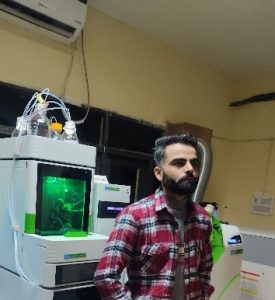 |
Ajaz Ali Ahmed Khan
|
Understanding population dynamics of malaco fauna and their role in aquatic ecosystem functioning. Functional genomics of molluscs and screening mollusks for secondary metabolites with potential therapeutic benefits | UGC SRF |
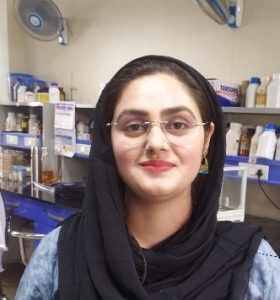 |
Shamsun Nisa
|
Diversity and interactions of nematode communities associated with corms and rhizospheric soil of Crocus sativus. Studying how nematodes impact regulation of secondary metabolites in saffron, including mechanisms influencing metabolite production and effects on plant health and nutrient availability. Insights to enhance saffron production and sustainability. | CSIR SRF |
 |
Kajol Verma
|
Working on gastropods focusing on their functional genomics and genetically encoded metabolites. | CSIR-JRF |
 |
Harshpreet kaur
|
Working on deep-sea benthic organisms with molecular characterization and metabarcoding techniques. | Project Assistant |
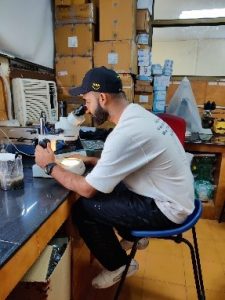 |
Dr Waqas Ahmed
|
Population dynamics, structure and diversity of macro invertebrates and their role in functioning of benthic ecosystem with special emphasis on oligocheates.
Harnessing Machine Learning and Bioinformatics to understand the Genomic Mysteries of Aquatic Invertebrates. |
PhD awarded |
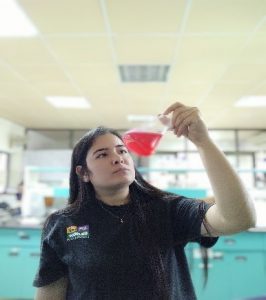 |
Jyoti Chandan |
Developing a morphological and molecular taxonomic database of nematode communities in Withania somnifera’s rhizosphere and surrounding soil, understanding their role in plant phenotypic and genotypic variation, and screening nematode gut and surface microbial communities for bioactive secondary metabolites. |
PhD submitted |
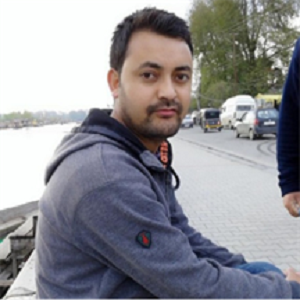 |
Dr Mohd Hassan |
Soil Invertebrate Community and Its Potential Contributions to Ecosystem Functioning and Therapeutic Possibilities. |
PhD awarded |
 |
Dr. Suruchi Gupta
|
Research combining Withania somnifera genetics and CRISPR/Cas9 gene editing to enhance withanolide content. Using modern bioinformatics approaches to predict gene candidates for enhanced metabolite production and analyze omics data to identify gene targets for metabolic improvement. | DBT RA |