Screen Reader Access
CSIR-IIIM
ARTICLE LINK: View
Key Findings:
-
- The study by CSIR-Indian Institute of Integrative Medicine explored microorganisms from the medicinal plant Withania somnifera
- Researchers identified Aspergillus aculeatus S20, which produces the compound okaramine H
- Okaramine H showed potential against the Leishmania donovani parasite, indicating it could be a new treatment for leishmaniasis.
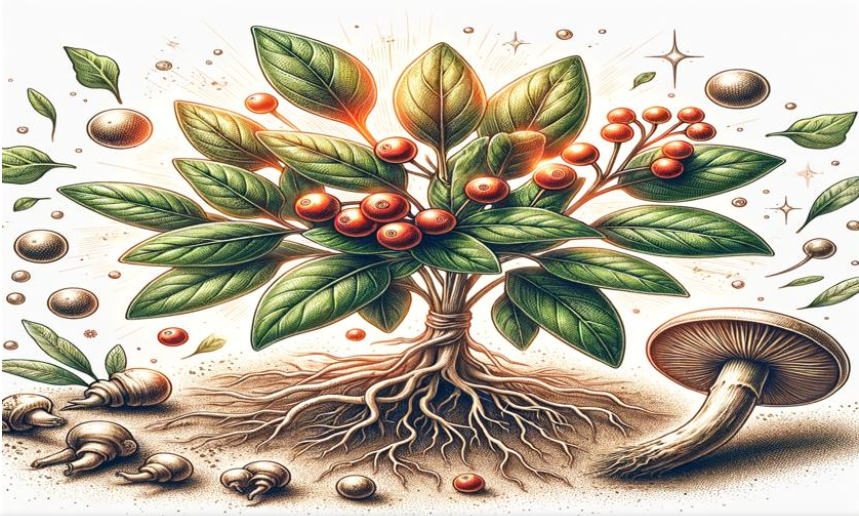
The search for new therapeutic agents continues to be a crucial endeavor in medical research. One promising area of study is the exploration of medicinal plants, which have long been recognized for their therapeutic potential. A recent study conducted by the CSIR-Indian Institute of Integrative Medicine has shed light on the potential of Withania somnifera (L.) Dunal, a plant known for its medicinal properties in Ayurveda, to provide new drug scaffolds[1].The study focused on isolating and analyzing microorganisms associated with Withania somnifera, specifically epiphytic fungi from the plant’s leaves, stem, and fruits. Among the five filamentous fungi identified, Aspergillus aculeatus S20 was found to produce an indole alkaloid known as okaramine H. This compound was isolated using advanced chromatographic techniques, including High-Performance Thin-Layer Chromatography (HPTLC) and High-Performance Liquid Chromatography (HPLC). The structure of okaramine H was confirmed through Nuclear Magnetic Resonance (NMR) and Mass Spectrometry (MS), revealing a high purity of over 90%.
Okaramine H is well-known for its insecticidal properties, but this study is the first to explore its potential against the Leishmania donovani parasite, which causes leishmaniasis. The compound demonstrated inhibitory effects on Leishmania donovani promastigotes under in vitro conditions, with an IC50 value of 147 μg mL-1, indicating its potential as an antileishmanial agent.
The findings of this study are significant in the context of previous research on natural products. Historically, natural products have been a rich source of novel drug structures, particularly in the fields of oncology and anti-infective therapies. Earlier reviews have highlighted the continued relevance of natural products in drug discovery, despite the rise of synthetic chemistry and combinatorial techniques[2][3]. These reviews have also pointed out the critical role of microorganisms in producing natural product drugs, suggesting that microbial interactions with their host plants can yield valuable therapeutic compounds[2][3][4][5].
The current study builds on these insights by demonstrating that endophytic and epiphytic microorganisms associated with medicinal plants like Withania somnifera can produce novel bioactive compounds. This aligns with earlier findings that microbes are prolific producers of secondary metabolites, which can serve as key scaffolds for drug development[5]. The discovery of okaramine H’s antileishmanial activity underscores the untapped potential of natural products in addressing unmet medical needs.
In summary, the research conducted by the CSIR-Indian Institute of Integrative Medicine highlights the importance of exploring medicinal plants and their associated microorganisms for new drug discovery. The study not only adds to the growing body of evidence supporting the value of natural products but also opens new avenues for developing treatments for diseases like leishmaniasis. By leveraging advanced analytical techniques and building on previous research, scientists can continue to uncover the therapeutic potential hidden within nature’s vast chemical diversity.